Corner Chair / Floor Sitting Support
Often used for supported floor sitting, early sitting practice, therapy activity, play, feeding support, and trunk support where suitable.
A corner chair should match the child's sitting control, trunk support, pelvic position, head control, floor activity needs, caregiver routine, and safety - not only the product name.
Many parents search for a corner chair when their child has difficulty sitting safely on the floor, falls sideways, slides forward, or needs better support during feeding, play, learning, or daily activities. SafetyAid & Co. helps families choose corner chairs and postural seating support through assessment-led guidance.
This guidance page applies to equipment delivered and used in Pakistan. SafetyAid & Co. provides specialist assessment and customization direction; RehabMart coordinates local quotation and fulfilment.
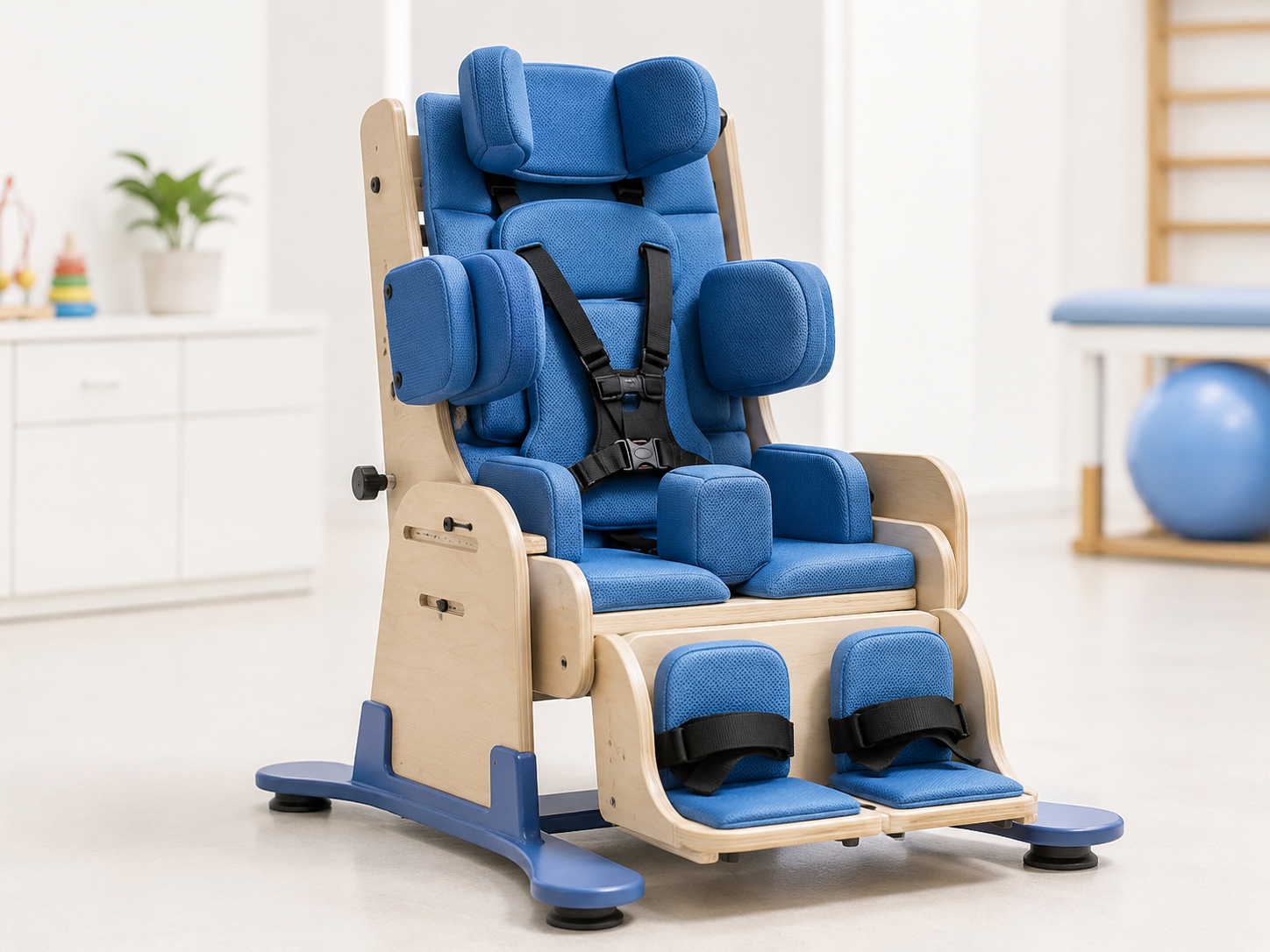
A corner chair is a supportive seating option that can help some children sit with better trunk support and body alignment, often during floor-level activities, feeding, play, therapy, or early sitting practice. It may support the back, sides, pelvis, hips, and sometimes head, depending on the child's needs.
Often used for supported floor sitting, early sitting practice, therapy activity, play, feeding support, and trunk support where suitable.
Often used for more structured sitting support, daily care, activity table use, feeding position, tray support, foot support, pelvic control, and adjustable postural needs.
CP Chair for Children in PakistanA corner chair may be useful for some children, but other children may need a full CP chair, activity chair, stroller support, standing frame, gait trainer, or custom seating depending on assessment.
Helps support trunk position during floor-level sitting where suitable.
Supports safer seated alignment and may reduce sliding where appropriate.
May help maintain a more stable sitting position during daily activity.
Considered only where clinically suitable for leg position and safety.
May support feeding, play, learning, or therapy activities if suitable.
Reviewed when the child has weak head or trunk control.
Considered for comfort, posture, sliding risk, and activity use.
Reviewed so the support fits the child and daily family routine.
Children with cerebral palsy may have different posture, tone, trunk control, head control, hip position, leg position, balance, and fatigue levels. Some children may sit better with corner support. Some may need a more structured CP chair. Some may first need therapy positioning, standing support, or walking support. SafetyAid & Co. avoids recommending one standard sitting product for every child.
Basic seating measurements may help describe the current setup but do not confirm a product or configuration. Photographs or video should be provided only if later requested through an approved review pathway.
The public assessment prepares a local browser draft. Nothing is automatically submitted, and no official case, recommendation, quotation or order is created. Review begins only when the user deliberately shares the draft through an approved channel. If accepted, SafetyAid considers the functional direction and RehabMart coordinates Pakistan quotation and fulfilment under one SA Case Reference.
For equipment delivered and used in Pakistan, SafetyAid provides assessment-led equipment direction while RehabMart coordinates local quotation, production or procurement, fitting, delivery and follow-up after an accepted review.
A corner chair is a supportive seating option that may help a child sit with better trunk and side support during floor-level activities, feeding, play, therapy, or early sitting practice.
No. A corner chair is usually focused on supported sitting and positioning, often at floor level. A CP chair may provide more structured postural seating, tray support, foot support, pelvic positioning, growth adjustment, and daily-care support.
No. Suitability depends on the child's head control, trunk control, pelvis position, tone, posture, sitting ability, feeding needs, safety, and caregiver routine.
Corner chairs and pediatric seating require individual review. The assessment remains a local draft until deliberately submitted; submission creates an SA Case Reference for review, not a recommendation, quotation or order.
Begin with the local assessment draft and share only relevant information after reading the privacy notice. Photographs or video should be provided only if later requested through an approved review pathway.
The right option depends on assessment. Some children need corner sitting support, some need a structured CP chair, and some may also need standing or walking support depending on posture, safety, and functional goals.
Start with a local assessment draft covering sitting posture, trunk control, floor activity and daily-care needs. If deliberately shared and accepted for review, SafetyAid will guide the next equipment-focused step.