Basic Pediatric Walker
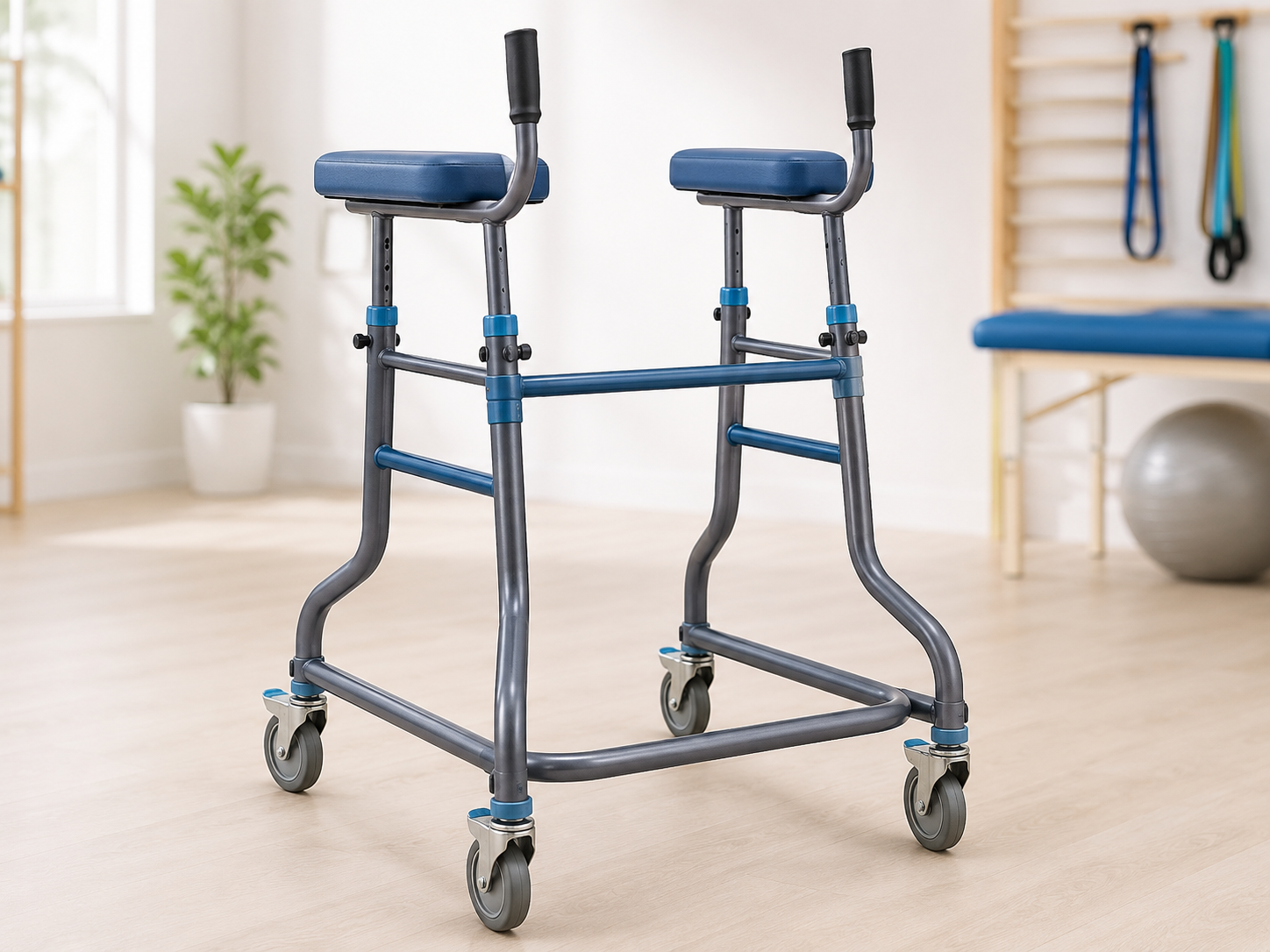
For children who can bear weight and need simple balance support under supervision.
A CP walker should match the child's balance, trunk control, posture, stepping pattern, support level, safety, and therapy goals - not only the product name.
Many parents search for a CP walker when their child has difficulty standing, balancing, stepping, or walking independently. SafetyAid & Co. helps families choose pediatric walking support through assessment-led guidance. Children with cerebral palsy or neurological conditions may need different support depending on trunk control, standing balance, leg strength, tone, foot position, stepping pattern, fatigue, and safety.
For families searching for a pediatric walker in Pakistan or a walker for a CP child, SafetyAid & Co. first reviews balance, trunk control, stepping ability, current support, and safety needs before suggesting a walking support pathway.
This guidance page applies to equipment delivered and used in Pakistan. SafetyAid & Co. provides specialist assessment and customization direction; RehabMart coordinates local quotation and fulfilment.
Some children only need light walking support. Some need a posture walker. Some need forearm support. Some need a gait trainer with pelvic or trunk support. Some children may need standing support before walking support. SafetyAid & Co. avoids recommending one standard walker for every child.
For children who can bear weight and need simple balance support under supervision.
For children who need walking support with better body position, posture control, and guided movement.
For children who lean forward, need upper-body support, or cannot use a standard hand-grip walker safely.
For children who need more controlled walking support, trunk support, pelvic support, seat support, or assisted stepping guidance.
For children who first need upright positioning, weight-bearing tolerance, and alignment before walking practice.
For children who need adjusted frame height, trunk support, pelvic support, seat support, or caregiver-assisted mobility planning.
For supported walking when the child has enough weight bearing, balance, and stepping potential with assistance.
Walking & Gait SupportFor more controlled walking practice where the child needs guided support for posture, balance, trunk, pelvis, or stepping.
Gait Trainer for Children in PakistanFor supported upright positioning and weight bearing before walking support is safe or suitable.
Standing Frame for Children in PakistanSafetyAid & Co. may recommend a walker, gait trainer, standing frame, CP chair, or a combination depending on the child's assessment, safety, and functional goals.
A CP walker may not be enough when the child needs more guided stepping support, trunk or pelvic support, standing tolerance review, or caregiver-assisted walking practice. In those cases, SafetyAid & Co. may review whether a gait trainer, standing frame, seating support, or a combined pathway is more suitable.
Photos, short walking videos, and basic measurements can help SafetyAid & Co. understand balance, stepping ability, trunk control, hand support, current walker use, standing tolerance, and caregiver handling needs. Final guidance still depends on assessment and review.
The public assessment prepares a local browser draft. Nothing is automatically submitted, and no official case, recommendation, quotation or order is created. Review begins only when the user deliberately shares the draft through an approved channel. If accepted, SafetyAid considers the functional direction and RehabMart coordinates Pakistan quotation and fulfilment under one SA Case Reference.
For equipment delivered and used in Pakistan, SafetyAid provides assessment-led equipment direction while RehabMart coordinates local quotation, production or procurement, fitting, delivery and follow-up after an accepted review.
A CP walker is a walking support device used to help some children with cerebral palsy or neurological conditions walk with better safety, balance, posture, and caregiver supervision.
No. Suitability depends on standing balance, trunk control, weight-bearing ability, leg strength, tone, foot position, stepping pattern, fatigue, and safety.
A basic walker gives simpler balance support. A gait trainer usually gives more controlled support for posture, pelvis, trunk, seat support, or assisted stepping. Some children need a gait trainer instead of a basic walker.
Some children may need standing support first to improve upright tolerance, alignment, weight bearing, and safety before walking support is considered.
Walking supports require individual review. The assessment remains a local draft until deliberately submitted; submission creates an SA Case Reference for review, not a recommendation, quotation or order.
Begin with the local assessment draft and share only relevant information after reading the privacy notice. Photographs or video should be provided only if later requested through an approved review pathway.
Start with a local assessment draft covering balance, posture, standing ability, stepping pattern and safety needs. If deliberately shared and accepted for review, SafetyAid will guide the next equipment-focused step.