CP Chair / Postural Seating
For sitting, feeding position, posture support, learning activities, and safer daily care.
Postural Seating SystemA CP chair should match the child's posture, sitting control, feeding needs, caregiver routine, and growth - not only the product name.
SafetyAid & Co. helps families choose CP chairs and postural seating support through assessment-led guidance. Children with cerebral palsy may need different levels of sitting support depending on trunk control, head control, hip position, feeding posture, tone, balance, and daily care needs.
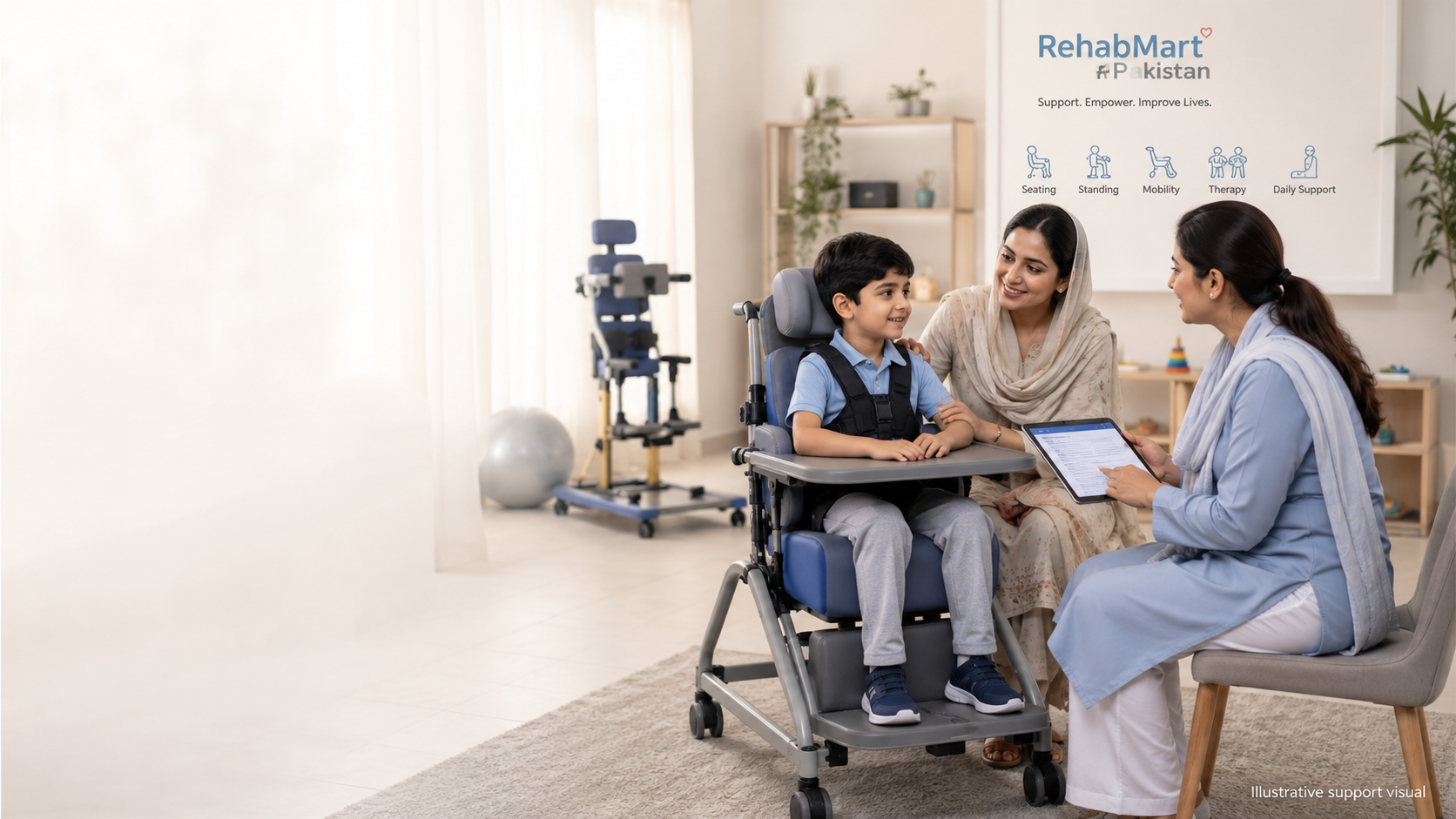
This guidance page applies to equipment delivered and used in Pakistan. SafetyAid & Co. provides specialist assessment and customization direction; RehabMart coordinates local quotation and fulfilment.
A CP chair is not the same for every child. Some children need simple sitting support. Some need lateral trunk support, head support, pelvic positioning, abductor support, foot support, tray support, recline, tilt, or customized seating. Some children may also need standing support, gait training, stroller support, or bathroom positioning depending on their functional level and family routine.
For sitting, feeding position, posture support, learning activities, and safer daily care.
Postural Seating SystemFor supported weight bearing, upright positioning, stretch, alignment, and participation when suitable.
Standing Support SystemFor supported stepping practice, balance support, and assisted walking when clinically suitable.
Walking & Gait SupportSafetyAid & Co. may recommend seating alone, standing support, walking support, or a combination depending on assessment.
For children who need sitting support, trunk or pelvic control, activity sitting, feeding support, or daily seating support after assessment.
Postural Seating SystemFor selected children who need floor-based sitting support, early posture support, or therapist-guided positioning.
Corner Chair for CP ChildFor children who need more specific posture, size, support level, accessories, or caregiver handling review.
Start AssessmentBasic measurements can help SafetyAid & Co. understand sitting posture, trunk support, seat width/depth, foot support, and caregiver handling needs. Final guidance still depends on assessment, photos/videos, current sitting ability, and daily routine.
The public assessment prepares a local browser draft. Nothing is automatically submitted, and no official case, recommendation, quotation or order is created. Review begins only when the user deliberately shares the draft through an approved channel. If accepted, SafetyAid considers the functional direction and RehabMart coordinates Pakistan quotation and fulfilment under one SA Case Reference.
For equipment delivered and used in Pakistan, SafetyAid provides assessment-led equipment direction while RehabMart coordinates local quotation, production or procurement, fitting, delivery and follow-up after an accepted review.
Families across Pakistan can begin with the local assessment draft. A diagnosis, age, photograph, measurement or previous product does not select equipment. Any later guidance considers the child’s current function, posture, risks, environment, communication, caregiver circumstances and professional precautions.
A CP chair is a supportive seating system designed to help a child sit with better posture, safety, and daily function. The support level depends on the child's sitting control, tone, posture, and daily routine.
No. Children with cerebral palsy have different needs. Some need basic sitting support, while others need head, trunk, pelvis, foot, tray, tilt, or custom seating support.
CP chairs require individual review. The assessment remains a local draft until deliberately submitted; submission creates an SA Case Reference for review, not a recommendation, quotation or order.
Begin with the local assessment draft and share only relevant information after reading the privacy notice. Photographs or video should be provided only if later requested through an approved review pathway.
Not always. Some children need sitting support only. Others may benefit from standing or walking support depending on assessment, safety, and functional goals.
Start with a local assessment draft covering sitting difficulty, posture and daily-care needs. If deliberately shared and accepted for review, SafetyAid will guide the next equipment-focused step.